Saturday, June 30, 2007

Day 3: Wrapping Up and Moving Forward

The day began with a talk with Leslie, an 18-year-old woman from Chicago. She described the day before meeting with her state legislators. "They all met us in a humble and listening manner. Congressman Rush moved from behind his desk. He told us that he wasn't going to do all the talking." Leslie says that when she returns home she wants to treat her own community with more respect. She hopes to encourage other young people to get involved in advocacy too. She calls the past 15 weeks and the past few days in Washington D.C. "unforgettable. A once in a lifetime event. I've met people this week that I probably would've never met in my life."


Next up on the day's agenda was a choice of four workshops with topics including the environment and social justice, consensus building, oppression, and coalition building. The workshop on oppression—taught by one of the leaders from the Seattle group, Joseph Seia—offered a variety of exercises. One involved people crossing from one side of the room to the other when he read off a description that fit them: "Cross over if you're under 21; cross over if your parents didn't finish school; cross over if you think you're overweight." All these statements were followed by stereotypes or facts associated with this criteria. Joseph did this exercise to demonstrate that everyone is both oppressed and oppressor at some point in their lives.

After lunch, people boarded buses for sightseeing trips. Some chose to visit the Washington D.C. Zoo while others opted for museums and national monuments. People from different cities, who were strangers just two days ago, joked and laughed together like old friends.

The evening's program included a speech by Juan Pacheco, a World Vision employee who works with the Norther Virginia Community Mobilization Initiative. He described his journey from troubled teen to someone who now works with troubled teens. He encouraged the group to reach out to marginalized young people in their communities. "Put life into the things that you want to change", Juan urged the group. "Be the vehicle of hope for other young people in your community." "Change takes time," he told them—encouraging them to continue pushing forward with the work they have begun this past 15 weeks.

The group cheered enthusiastically for Juan's speech and gave him a standing ovation. One young woman was moved to tears as she thanked him. "Everything was a blessing. Just listening to them helps us to move on and continue in our community."

The feeling seems to be unanimous about the first Youth Empowerment Summit as well. As the young people now head for home, they realize that they have power to make a big difference and lasting impact in their cities, their states, and their world.


This conference was supported by and produced with funds from Award No. 2005-JL-FX-0142 awarded by the United States Department of Justice, Office of Juvenile Justice and Delinquency Prevention. Points of view or opinions in this document are those of the author and do not necessarily represent the official position or policies of the U.S. Department of Justice.


Thursday, June 28, 2007

Day 2: A Trip to Capitol Hill

The day began with role-playing. Each team met
an experienced policy advisor from World Vision who coached them and rehearsed with them in preparation for their visit to Capitol Hill.
Breanna, a member of the Chicago delegation, made her empassioned plea about teen violence during the role-playing. One staff member urged the youths to share personal stories, as these would have a greater impact on their listeners.


Each YES summit participant received a T-shirt specially made for the conference. The T-shirts were all made by the four-member Appalachia delegation. Here, Jewel, left, and Samantha, right (of the Washington, D.C., delegation), model the T-shirts.


Thus, the army in Y.E.S. T-shirts headed for Capitol Hill to let their voices be heard. On the way there, Casey, 14, and Rodney, 15, of the Appalachia delegation, shared that they were a bit nervous to meet their legislators, but also excited. Said Casey about the Youth Empowerment program: "It's a great opportunity to speak your voice and communicate." Rodney said that through the Youth Empowerment program, he sees that he has "a voice in making a difference."


The Albany, Ga., delegation rushed toward the Capitol building for the first meeting of the day with Georgia senator, Johnny Isakson. They discussed with him the importance of continuing funding for a teen abstinence education program.


All the teams had the opportunity to meet with at least one legislator from their state. The participants expressed that they had been heard and felt empowered through the process. Here, the Appalachia team approached Sen. Robert Byrd's office to discuss the problems in West Virginia of youth struggling with substance abuse and unemployment.


Sen. Norm Coleman listened attentively as a member of the Minneapolis/St. Paul team discussed the fact that youth in their area do not understand how much their own financial decisions affect their lives both in the present and future.


Presidential candidate Sen. Hillary Clinton greeted members of New York's delegation.


Tacoma, Wash., team member Samuel discussed his team's recommendations with Sen. Patty Murray's assistant. The team wants the youth of Tacoma to be more involved in the city's lawmaking process. They proposed the creation of a Youth Advisory Board to be involved in such decisions.

The teams all had the opportunity to debrief on the day when they returned to the 4-H Conference grounds. "I felt like we were heard. They responded well," said one young woman. Laquasha, of the Chicago group, said, "They see youth from the inner city that care."

"I felt better about myself," said Rodney from Appalachia. "I was worried that they wouldn't hear my group. It was amazing."

The evening's finale came when the teams from New York, Albany, and Appalachia shared their media projects. The teams created these videos to showcase their communities--presenting the issues they are facing or what gives them hope. Each one met with thunderous applause. As the conference winds down tomorrow, each teen will have the opportunity to attend workshops in the morning. The afternoon is open for seeing many of the historic sites in Washington, D.C.

After today's events, the teams are making plans for the future. How can they keep building on the momentum they have gained over the past 15 weeks? That is the next step in their journey of advocacy.


This conference was supported by and produced with funds from Award No. 2005-JL-FX-0142 awarded by the United States Department of Justice, Office of Juvenile Justice and Delinquency Prevention. Points of view or opinions in this document are those of the author and do not necessarily represent the official position or policies of the U.S. Department of Justice.


Wednesday, June 27, 2007

World Vision's Youth Empowerment Summit Begins

In the sweltering heat of downtown Washington, D.C., in the shadow of the U.S. Capitol, more than 40 teens boarded a bus to take them to World Vision's first Youth Empowerment Summit. Young people from New York, Los Angeles, Seattle and Tacoma, were heading to Chevy Chase, Md., to the meet up with teams from Appalachia, Chicago, Minneapolis and St. Paul, Albany, Ga., and Washington, D.C.

High spirits prevailed as the bus made its way through D.C. neighborhoods. Paul Patu, leader of the Seattle delegation, tried to lead the bus in that perennial Seattle favorite, the Wave. The front of the bus, with the New York delegation, responded enthusiastically, but ironically, the back of the bus — filled with the Seattle and Tacoma delegations — did not join in. This was probably due to the fact that they had arrived at 8 a.m. after taking the red-eye flight from the Seattle/Tacoma airport.

At check-in, each youth participant received a gift bag, a folder with the schedule, and a map of Washington, D.C. Once they found their rooms, the first activity was dinner. Then they had some free time to relax and get to know one another better.


The Evening Program

The program kicked off with some light entertainment by DJ Cause and MC Effect. Then, to "break the ice," four staff members volunteered for a game similar to musical chairs. But when the music stopped, participants did not just lose their seat. Instead, Samantha, from the D.C. group, walked back and forth behind them with a cup of cold water, which she poured on the unfortunate staff person.

Finally, the evening's keynote speaker, Alexi Torres-Fleming, executive director of Youth Ministries for Peace and Justice from the Bronx in New York, encouraged the youth: "You are too necessary for the world," she exhorted them, "[and] it's time for you to take your place as leaders.”


Looking Forward

Anel and Karas, both from the New York delegation, were inspired by Alexi's speech. They each pulled out several pages of key points they wanted to remember from what Alexi said, especially her comment: "God doesn't call the prepared. He prepares the called."

"I starred that," said Anel. "It really got to me that people are waiting for us."


She added that it gave her strength and hope when Alexi told them not to forget who they are. Karas said the speech made her realize that she "can't wait for someone else to come along."

Anel looks forward to being able to partner with teens from the other cities after this conference. "I want to come back next year," she said, "with 50 people! The more [people] we have, the more our communities are changing."

On June 28, it's on to the Capitol where each team will meet with its respective legislators and talk about issues in their own communities.

This conference was supported by and produced with funds from Award No. 2005-JL-FX-0142 awarded by the United States Department of Justice, Office of Juvenile Justice and Delinquency Prevention. Points of view or opinions in this document are those of the author and do not necessarily represent the official position or policies of the U.S. Department of Justice.

How Does Hope Show up in Your Community?

This question was put to more than 90 teenagers across the United States when they began World Vision's Youth Empowerment program 15 weeks ago. At the three-day Youth Empowerment Summit beginning today, each of the teams from nine cities across the United States will get the chance to answer.

Samuel
"Youth being more active in the community overall is something that I'd like to see," says 20-year-old Samuel explaining why he wanted to be involved in World Vision's Youth Empowerment program. " To me, I felt that doing the YES summit would be a great way to be a part of our community in a different aspect and to be able to advocate for things that I believe should happen." One of those things he wants to happen includes young people having a bigger voice in the community.

Samuel first heard about the Youth Empowerment program through his volunteer work with Club Friday in Tacoma, Wash. When Deanna Neidlinger, a World Vision staff member told him about the program, he says, " I knew that was going to be fun. [I knew] I was going to learn a lot and I have."

A big part of the program for the Tacoma group has been discussing teens' interactions with the local businesses. Samuel sees the need for his group and other young people to be more active in community and city decision-making processes. The Youth Empowerment program provides tools in the lives of these teenagers to make this happen.

He currently works at a middle school in Tacoma, Wash. He helps run an after-school program and also acts as an assistant to teachers during the day. Samuel's answer to the question posed for each group's media project revolves around his work. "I see hope in the after-school programs concerning the kids and just giving them the attention that they need concerning academics."

He is excited for the visit to Washington D.C. Having never been, he looks forward to seeing some of the national monuments and meeting with other groups from all over the country. When his group returns to Tacoma, he looks for them to make an impact in the community. "I know that after we come back we're supposed to do something with the business leaders. I don't know what that's going to look like. I don't want to come back and say ok, cool that was a fun experience and go home and that'd be it. I want to do something where we [get] the kids involved."

Samuel says to people consider the Youth Empowerment program in the future, "If you believe you can change this community or you believe you're an important asset to your community, then this is something that you want to do."

Finally he thanks World Vision "Just for you guys supporting youth; just giving these kids—especially at Club Friday—a chance to talk about issues that they really feel in their heart. And to be able to give us a place—a forum—to be able to pursue that."


Ebony
Ebony, an enthusiastic 14-year-old, exudes passion when she talks about World Vision's Youth Empowerment program. A fire burns in her to change the world. She calls it "the fire of God." She first learned about the program through her sister, Kanda, who works for World Vision. She says that she did not think much of the offer at first because as she says, "My teachers at school are like you should do stuff like that. But sometimes it's a little boring."

However, once she started the program she realized it was something special. "Oh my gosh, it is so great! It's just so super. I didn't know. We took out of it way more than I would expect. She describes Deanna Neidlinger, the leader of the program in Tacoma, Wash. as a great advocate for the teens in the program. "She knows we can do whatever we want to do and that's what she's all about!" Ebony says.

She continues on describing the team, "All the people that are in our youth program are just so amazing. They are so different—like we all come from different aspects [of life]." Part of the beauty of this program has been to encourage young from different walks of life to come together and learn from each other. They have spent 15 weeks in a safe environment in which to express their viewpoints and passions in a manner that makes it more likely they will be heard. The program gives them the tools so they can be their own advocates.

Of the upcoming conference, Ebony says, "D.C.'s going to be amazing! I just want to meet the other youths and see what they're like." Each group will meet with their state legislators while at the conference. Ebony confidently says that what she wants to tell them is, "Basically, to just reassure them that we're going to change the world."

She hopes that when the group returns from Washington D.C. that they will be able to bring everyone in the downtown Tacoma community together and come up with a plan of action that includes everyone. "[I want to] stop acting like we're three different tribes in the same neighborhood, you know," she says.

Ebony enthusiastically recommends the Youth Empowerment program. "I would tell anybody to do it. Anybody! Even if they think they're not leadership material. It doesn't matter. It's just so amazing!"

This conference was supported by and produced with funds from Award No. 2005-JL-FX-0142 awarded by the United States Department of Justice, Office of Juvenile Justice and Delinquency Prevention. Points of view or opinions in this document are those of the author and do not necessarily represent the official position or policies of the U.S. Department of Justice.

Tuesday, June 26, 2007

How Does Hope Show up in Your Community?

Christopher

"My group is amazing! All of us are really eager to go out and make a change," says Christopher, 16. "There's people in the group that feed the homeless. They are volunteering at shelters, trying to help children. You know, just helping out. This is just the beginning and we didn't have any help doing this. What can we do with World Vision and the whole city behind us to push us?"

Christopher can't say enough good things about World Vision's Youth Empowerment program, which he has been attending for the past 15 weeks. He recently sat down to talk about the program and his time with a group from Tacoma, Wash., as they prepared for their trip to the Washington, D.C., area.

At first, the group struggled to choose a topic. Christopher explains that they came up with their own unique solution: "We worked for two weeks to find one topic and we're like, OK, this isn't working. We finally came to the conclusion, why don't we just do them all? I mean, we do them all so well, and we love them, and we're so passionate." Each person got an opportunity to explain where they see hope.

"I'm with an amazing group of people. I love them. Each week is different," Christopher says, adding that the programs and topics they discuss bring them together and allow them to express their feelings in a safe environment. "No wondering, 'Will they be my friend next week?' or 'Will they be mad at me?' or 'Do they think I'm stupid?'" The Youth Empowerment program equipped Christopher and the team with tools to get their voices heard. "You can talk like a grown-up about topics and get your point across and be what you've got to be," he says.

Christopher first heard about the Youth Empowerment program through Club Friday. His mentor, Diana Young, also a World Vision employee, told him about an underage club in Tacoma that provided a safe environment for youth to mingle, listen to music, and dance. But, he says, it is more than just a club. It is a caring environment where the Youth Empowerment meetings have taken place for the past 15 weeks. It provides life tools — of which the Youth Empowerment program is a part — to youth. "That's part of my hope," Christopher says. "I want there to be a Club Friday in every city. It's a place to have fun, but it's also a place to get ready for the real world.

"They pretty much teach you how to fly," he says, adding with a laugh, "and then fly with you your first few days."


Natalie

"I run an after-school program [in Auburn, Wash.] and I've worked there all year," says 19-year-old Natalie. "I like being involved with youth. So when I heard about [World Vision's Youth empowerment program] I wanted to get involved. I thought it would be interesting to meet people that do have a vision."

The interview for the program was a different type of interview for Natalie. She felt the staff asked really good questions such as what would you change in history if you could. Natalie answered that she would not want to change anything. "I think it all happened for a reason and we wouldn't be where we are today [without it happening]. Learning from it is more important."

The other question that stood out to her was what would you change in society right now. She explains that she has noticed that many people forget the United States as a potential mission field, instead focusing on Third World countries. "I think it's just an opportunity—there's so much youth and so much talent and people being neglected."

Her faith is a crucial aspect in her involvement in the program. "I think God puts you where you need to be. And I think if you have Jesus in your heart then he's going to use you wherever you are."

Natalie looks forward to meeting all the people from the other groups during the Summit. "I think it's kind of important to see where everyone's coming from. I think it'll be a really positive thing." She continues, "I think people will learn. I know that people are excited." Meeting the state legislators is another thing that Natalie looks forward to. "I think my only expectation of them," she says, "is for them to be really open and hear what we're saying."

When the summit in Washington D.C. concludes, Natalie hopes that the Tacoma group can "change some of the views that business owners and just some of the older community have about the youth. I think that their vision is really skewed," she says, then adds, "and for good reason. They're going off of facts that happened [in the past], but at the same to be able to say ok, well guess what, yeah that was a youth but there's also these youths too. They're all different. I mean look at us individuals instead of the category." She adds that the teens also need to look at the business owners as individuals.

"Putting yourself out there is really the hardest thing because I think that people just really stay in their comfort zone," Natalie says. "There's so many ways that you can touch people and change their lives. Love is a powerful weapon."


This conference was supported by and produced with funds from Award No. 2005-JL-FX-0142 awarded by the United States Department of Justice, Office of Juvenile Justice and Delinquency Prevention. Points of view or opinions in this document are those of the author and do not necessarily represent the official position or policies of the U.S. Department of Justice.

Monday, June 25, 2007

How Does Hope Show up in Your Community?

This question was put to more than 90 teenagers across the United States when they began World Vision's Youth Empowerment program 15 weeks ago. At the three-day Youth Empowerment Summit beginning on June 27, 2007, each of the teams from nine cities across the United States will get the chance to answer.

Natalie, a 19-year-old participant from Tacoma, Wash. says, "Youth does care. We want to be heard." The Youth Empowerment program was designed to provide young people with the tools to enable them to be a voice for their communities.

For the past 15 weeks, each of the nine teams has learned about themselves, their team members, their city, and how they can make a difference. Now they will meet other teens from across the country and learn about their communities and the issues facing them.

At the conference, the youths will have the opportunity to discuss problems affecting their neighborhoods—such as teen violence—with their congressional representatives. They will learn from national speakers and workshop leaders about problems related to poverty and how they can be involved in the solution. Finally, they will have time to go sightseeing on Capitol Hill.

Daily coverage of this event—including interviews with participants and the day's activities—will be available on this site. Be sure to check the website often to see what is happening at this exciting event and to find out how hope is alive in communities across the United States.


This conference was supported by and produced with funds from Award No. 2005-JL-FX-0142 awarded by the United States Department of Justice, Office of Juvenile Justice and Delinquency Prevention. Points of view or opinions in this document are those of the author and do not necessarily represent the official position or policies of the U.S. Department of Justice.

Tuesday, June 12, 2007

Make a Difference ... for One Child


Share Your Own Sponsorship Story: Click the "Comments" Link Below


For more videos or to sponsor a child:
http://www.WorldVision.org/


One of the coolest things about World Vision isn't simply that the Christian humanitarian organization helps large numbers of people affected by disasters or humanitarian crises ... it's that we have created a way for people who care about those who are suffering to get connected to a single child who needs their help.

There are a number of ways we do this, but one of the most tried and true is called "child sponsorship." When sponsors find a child in a developing country to connect to, not only do they provide desperately needed financial support which resources a program, designed with full participation by community leaders to strategically meet the needs of that community's children, to provide things like healthcare, education, nutritious food, clean water and sanitation ... but they also create a one-to-one relationship with that child which benefits both the donor and the child (as well as her family and community). By praying for each other, communicating regularly via e-mail or postal mail, and even the occasional visit, for many this relationship has blossomed into a lifelong growing experience more precious than money.

Personally, my daughter Mandy and I saw the benefits of sponsorship firsthand when we visited Gracia, our sponsored child in the Congo, last summer. It was one of those life-changing experiences which neither of us will ever forget.

Our creative team here at World Vision has just developed a series of unique new videos highlighting the joys and benefits of child sponsorship. I have attached the very first one at the top of this blog entry. We are planning on launching it on our homepage later today ... but I wanted you to be the first to see it! I would appreciate you posting any comments you might have about this video.

And also be sure to share it with your friends. They can even go on YouTube and view it there, rate it, provide their comments or share it with their network of friends.

And, let them know about how fun and easy it is to sponsor a child on the World Vision Web site! You can search the online photo profiles of thousands of available children in dozens of developing world countries for that perfect child God has selected for you to connect with. (You can even search by birth date!)

Ever think the enormous problems of the world are too big to do anything about? Think again. You are just one person ... but you can make a difference in the life of a child who needs your help!


SPONSORS: BE THE FIRST TO SHARE YOUR STORY

We invite you to share your own story about the joys of sponsorship on this blog. Please click the "comments" link below to send us your story or to read the stories shared by other sponsors.

Wednesday, April 25, 2007

10 Years on the Web ... a Decade of Connecting to the Poor

Ten years ago this morning, I pressed a really scary big button. It was the button that made World Vision's United States Web site first go "live" on the World Wide Web at http://www.WorldVision.org/.


World Vision's first home page boasted 12 links and focused on the famine in North Korea. Today's homepage has 212 links and is a gateway to nearly everything World Vision has to offer.


As an editor with the world's largest and oldest Christian relief and development organization, I had been working with a team of folks for more than a year to turn our first Web site from dream to reality. A massive famine in North Korea was in full swing, and this added just the sense of urgency we needed to actually get online, ahead of schedule. Our very first Web site brought photos and stories about this crisis in a little-understood part of the world, to the living rooms of average Americans who cared and who responded compassionately. We were astounded by the response.

Ten years later, I am taking a few moments for a deep breath and a little reflection. The North Korea famine was just one in a string of crises, where we were able to turn to our Internet presence for rapid dissemination of critical information. In many large emergencies (such as Hurricane Mitch which devasted Latin America in November of 1998, or the Asian Tsunami of December 26, 2004) our Web site has been our first line of communication with the world. Frequently we have been able to go live with critical information within two or three hours of the time a large emergency strikes.

One of the really exciting things about our work here with the internet is how it has accelerated exponentially during the past three years. Three years ago I wrote a presentation, celebrating the fact that during our first seven years we had more than 6 million visits to our Web site. I just rechecked that number last night, and during the subsequent three years, through today, we've had an additional 12+ million visits. Our traffic has quadrupled.

And recently we celebrated a landmark: our 100,000th child sponsored online on our Web site! Nonetheless our current rate of online sponsorship exceeds 30,000 children each year. It's entirely possible we could hit 200,000 childen sponsored, late next year.

In recent years, I have actually seen many of our metrics actually double.

But even that's not the most exciting thing. The most exciting thing, to me, is the way God is using World Vision's internet presence for good in the world, to make a significant impact on the dire poverty and disease that is still the #1 problem besetting the planet. People like you and me who can actually do something about these problems, working together, are being mobilized by World Vision's internet presence at unprecedented rates. For instance, online "opt-in" subscriptions to our e-mail and internet news and resources have increased sixty-fold during the past six years!

To me, the internet has always been merely a tool to demonstrate the amazing work that compassionate people are doing throughout the world to reach out to children and their families who are impoverished and hurting. And not only that, it is a tool to actually connect people who care, with people who need care.

And, 10 years in, I feel like we are barely scratching the surface. The potential for the internet to revolutionize the way we go about achieving our mission is phenomenal, and so far largely untapped.
Practically every meeting I have attended during the past 10 years, we end up sitting around the table and dreaming: "Wow, wouldn't it be cool if we could do this ..." or "Imagine, if we could use the internet to ..."

I am grateful to God that many of those dreams have come true on our Web site during the past 10 years. Most have not ... yet. But, Lord willing, they will!

Thursday, February 01, 2007

World Vision Congo Video


Several months ago on this blog it was my privilege to share stories about the summer week that my daughter Amanda and I were able to spend in the Democratic Republic of Congo with World Vision's amazing staff there.
It took awhile to finish, but I am pleased to present a little video that shows some of what we saw.


The video was shot on a Sony digital camera, uploaded to my Dell laptop and compiled using Adobe Premiere and Microsoft Movie Maker software.

In addition, it contains a sequence of still shots which have been animated by Adobe PhotoShop Elements 4.

Let me know what you think. Thanks for visiting. And don't forget about the children in the Congo who desperately need our help and prayers during this crucial period in their history!

- Larry Short (World Vision Web Editor)

Wednesday, December 13, 2006

A Letter We Received


Dear World Vision,

My name is Lily Zamadics and I am six years old.
My friends gave money at my birthday party so that we could buy things for other children. We collected so much money – it’s almost $200! I picked out 10 fruit trees because people can eat the fruit. My friend Chloe thought chickens would be good because of the eggs, so we bought two of those. My friend Conor really wanted someone to have a warm blanket. And my other friends chose the goat because of the milk.

I hope the kids will love what we got for them!

Love,

Lily & Friends (Chloe, Conor, Amanda, Alison, Ryan, Ashley, Kennedy, Gracie, Erin, Madeline, Morgan, Catherine & Michaela)


... PLUS A NOTE FROM MOM

Contributed by Sally Zamadics

My daughter’s sixth birthday was approaching. As I looked around Lily’s room -- filled with clothes, books, toys and everything else a six-year-old would want or need -- I couldn’t bear the thought of receiving more “stuff.”

First of all, she didn’t need any more toys. And secondly, we didn’t want our daughter to start to expect an excessive amount of gifts at every birthday or holiday.

So, my husband and I decided to use her birthday party as a way to give rather than receive. We explained it to Lily ... and she was on board!

I contacted the Gift Catalog department at World Vision and told them what we wanted to do. They directed me to the “Giving Toolbox,” a complimentary kit that can be ordered online. I ordered, and it arrived within two weeks.

When we mailed Lily’s birthday invitations to her friends, we included a note that asked her friends to bring a cash donation instead of gifts. We hung the poster at the party (which was included in the Giving Toolbox) and we collected donations as her friends arrived. We collected $180.

During the birthday party, I sat down with the children. I explained that not all children have what they have. "Some children can’t afford to go to school, and don’t have enough food to eat!" I told them.

They all listened! I told them that we were going to purchase some items from the Gift Catalog so that some other children could have a little bit more. They were excited!

We looked through the catalog and I explained some of the options. They were responsive, and they offered ideas of what we should purchase and why. In the end, they chose one goat, two chickens, ten fruit trees and one warm blanket.

The kids really “got it,” and it was an incredibly rewarding experience for all.

This was an absolute “win, win” for everyone. Lives half a world away will be changed through the gifts we purchased from the Gift Catalog. And my daughter and her friends realized that it actually does feel better to give than to receive.

We will continue to do this for Lily’s birthday every year, and I will do it for my younger daughter when she is older. I want both Lily and Ava to grow up knowing it is their responsibility to share what God has given them with others.

Pedaling World Vision's Great Gift Catalog

Like many of us here in the U.S., I enjoy biking. I don't have to ride a bike; after all, I do have a car, and it's generally a faster way to travel. But like many, I bike for fun, and for exercise.

While in Southern Africa this summer, I was amazed at how many bicycles I saw in many places I traveled. In Lubumbashi, Congo, there seemed to be far more bikes on the road than cars. And it was obvious that these cyclists weren't doing it for health or pleasure. Many of the bicycles I saw were so loaded with commodities you could barely see the person who was walking along behind it and pushing it down the road! I quickly realized people were using bikes like trucks. They were an essential part of doing business, a commerce vehicle.

In developing countries such as the Congo, a bicycle can be as valuable as a car is here. It can make or break a business. It can mean the difference between having food in your stomach, or not. In many communities, it is the only way midwives or doctors or nurses can arrive quickly at the scene of an emergency.

While healthy, my bicycle habit is not cheap. Just to replace a wheel on my cyclocross bike can cost $300.

That's why this Christmas, rather than getting me a new wheel or the latest bike gadget, I'm going to recommend to my family that they purchase an entire bike through World Vision's Gift Catalog, where a gift of $210 will provide a sturdy, brand-new bike to someone who really and truly needs it -- for their livelihood, not just for exercise! -- in a developing country such as the Congo.

For those of us who "have everything," and have a hard time thinking of what to suggest when people ask us what we want, the Gift Catalog is the greatest thing! I am really enjoying thinking about how foregoing that new wheel will actually help get someone somewhere else in the world a whole new set of wheels, something that will really make a difference and change their life.

And it's also a great way to do last-minute shopping, all the way up until Christmas Eve.

For the next week or two, in this blog space, we're going to feature some cool stories from people who have discovered how the Gift Catalog revolutionizes their view of Christmas giving. Starting tomorrow! So stay tuned.

Monday, December 04, 2006

Phoenix, Arizona Event: Hoops for Hope

VIDEO


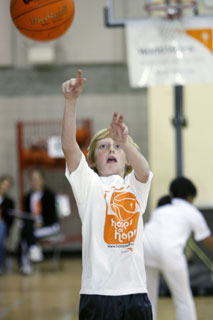
Austin Gutwein 12, shoots freethrows during his grassroots nationwide movement ("Hoops of Hope") event on Saturday, December 2 at Central Christian Church in Mesa, Arizona.

Gutwein is in his third year of the Hoops of Hope mission, where children shoot basketball freethrows to support AIDS orphans.

All photos by David Kadlubowski.


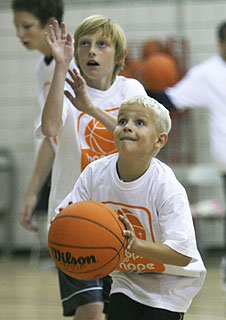
Austin offers some advice to Kyle Patterson 6, as he shoots freethrows.


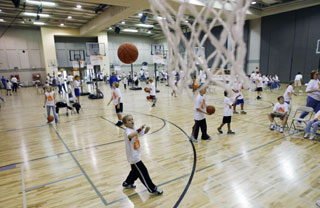
Tyler Petrosky 9, (center) shoots freethrows during theHoops of Hope event in Phoenix on Saturday. Hundreds of youngsters across the country joined Austin in his efforts.


Participate in Hoops of Hope.


Donate to the Seattle Hoops of Hope fundraising effort.


- Back to Top -

Santa Cruz, California: AIDS Walk Event


- back to top -

Friday, December 01, 2006

World AIDS Day 2006 - Event Index

Every 14 seconds, a child loses a parent to AIDS. This is a challenge laid at the feet of each and every person on the planet who considers compassion a virtue, and particularly to those who believe there is a God who cares for and identifies with those who suffer in silence.

The clock is ticking. We must do what we can today to start building a better world for children, to do all we can to put their needs first. AIDS is devastating families and communities around the world, and children are suffering the most.

This blog is a compilation of reports from World AIDS Day activities throughout the nation, a 24-hour snapshot documenting the activities and contributions of thousands of volunteers throughout the U.S.

We have indexed blog entries by city and state. Clicking on a link will take you to the most recent entry regarding the World AIDS Day activities in that city. There may be additional entries for that city lower down, so be sure to scroll down.

We encourage you to submit your own comments or observations in association with any entry. Simply click the "Comments" link at the end of this or any blog entry. All comments will be reviewed by an editor then posted as appropriate.

California
Illinois
New York
North Carolina
Washington

World AIDS Day in Chicago


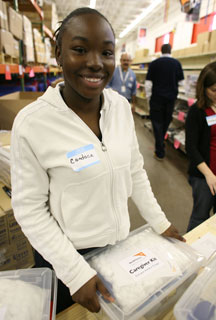
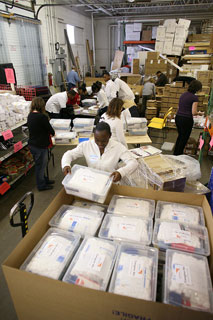
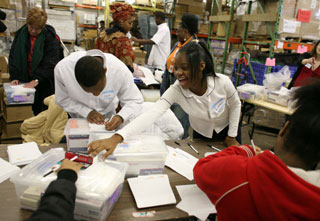
Eighth graders from a Chicago area elementary school stopped by the World Vision Storehouse to help put together caregiver kits for aids workers that will be sent to Africa. This is Candace Mason Woods preparing one of the finished kits for shipping.


Christopher Walker (left) and Imari Townsend.


Eighth grade teacher Ms. Brandy Bolden (left) helps Princess Zulu of Zambia assemble Caregiver Kits.


Princess Zulu helps student Candace Mason Woods assemble kits.


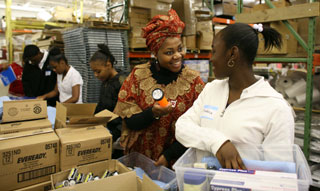
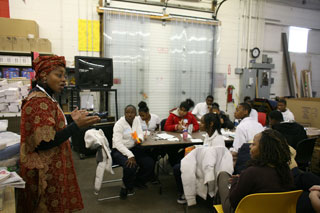
Princess Zulu, who is a prominent Zambian who is HIV-positive, shares her story and her hope with the visiting students.


AIDS Walk

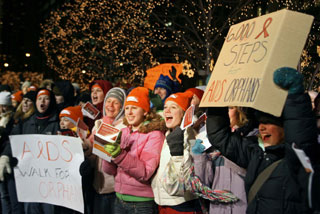
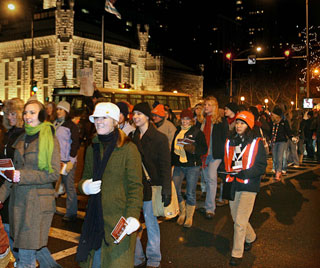
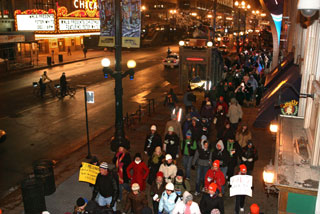
Despite 20 degree weather and snow and ice on the ground over a thousand marchers from World Vision took to the streets of Chicago to support International AIDS Day which took place around the world Friday. The route of the march took the marchers through down town Chicago in the early evening hours. As the marchers made their way past the NBC 5 TV studios they found themselves part of the evening news.

All Photos by Bob Black/Genesis Photos.

The group of marchers makes its way past the old water station on North Michigan Ave.


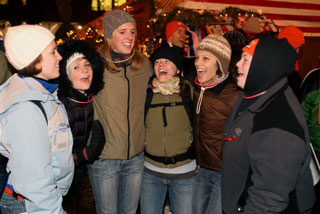
Warming up with a few good marching songs.


All photos courtesy Bob Black/Genesis Photos.

- Back to Top -